Showing posts with label Group. Show all posts
Showing posts with label Group. Show all posts
Audience feedback Before and After viewing the Opening Sequence
Before watching the opening sequence
1. What would you expect of the protagonist?
2. What sort of props and costumes would you expect?
3. What sort of locations would be expected?
4. How would you expect it to open?
5. Who would you expect the antagonist to be?
After watching the opening sequence
1. Do you think this would be a suitable crime-thriller?
2. What did you think of the protagonist?
3. What did you think of the antagonist?
4. What part did you enjoy the most?
5. Was it what you expected?

Target Audience feedback on Rough Cut
What are all the characters roles?
Anthony - he plays the part of Ken Bateman the detective/stalker.
Mariana - plays the role of Bethany Young the girl that is being stalked by Ken Bateman, she is also getting love letters from him.
Charlie - he plays the part of Cameron Jones the boyfriend and he is the person getting the death threats.
Who is rendering the photo?
Ken Bateman is the one rendering the picture.
Why is all this happening?
This is all happening because Ken Bateman is jealous of the relationship that Bethany Young and Cameron Jones have because he is also in love with Bethany and wants to get Cameron out of the picture so that he can have Bethany all to himself.
Why is the being kidnapped?
They haven't been kidnapped.
Who is the kidnapper?
There is no kidnapper, however there is a weird stalker person called Ken Bateman
Who is the message for?
The message is for Cameron Jones' in order to scare him away from Bethany.
What ends up happening?
The detective is revealed as the stalker and is taken into police custody, while in court it is decided that Ken Bateman is to go to a mental hospital, in which he will stay until the day he dies.
What else will be involved in the plot?
The plot of the movie will also show how the stalker is affecting Bethany and Cameron's relationship and personal life.
What gave you the plot idea?
From various crime and psychological movies and T.V shows.
Anthony - he plays the part of Ken Bateman the detective/stalker.
Mariana - plays the role of Bethany Young the girl that is being stalked by Ken Bateman, she is also getting love letters from him.
Charlie - he plays the part of Cameron Jones the boyfriend and he is the person getting the death threats.
Who is rendering the photo?
Ken Bateman is the one rendering the picture.
Why is all this happening?
This is all happening because Ken Bateman is jealous of the relationship that Bethany Young and Cameron Jones have because he is also in love with Bethany and wants to get Cameron out of the picture so that he can have Bethany all to himself.
Why is the being kidnapped?
They haven't been kidnapped.
Who is the kidnapper?
There is no kidnapper, however there is a weird stalker person called Ken Bateman
Who is the message for?
The message is for Cameron Jones' in order to scare him away from Bethany.
What ends up happening?
The detective is revealed as the stalker and is taken into police custody, while in court it is decided that Ken Bateman is to go to a mental hospital, in which he will stay until the day he dies.
What else will be involved in the plot?
The plot of the movie will also show how the stalker is affecting Bethany and Cameron's relationship and personal life.
What gave you the plot idea?
From various crime and psychological movies and T.V shows.


Changes made during filming
During the filming of our opening sequence, several changes were made to the shots taken, the costumes and locations-
1. Filming of the scenes in the interview room was moved from Friday(25th November), to Monday(28th November) due to the location not being accessible on that day.
2. Filming in the corridor was moved from Tuesday(22nd November) to Thursday(24th) due to a member of the group needing more time to prepare, as well as not being told on the day of the planning about the filming.
3. Several additional shots were taken in addition to the shots in the main shots detailed in the storyboard.
1. Filming of the scenes in the interview room was moved from Friday(25th November), to Monday(28th November) due to the location not being accessible on that day.
2. Filming in the corridor was moved from Tuesday(22nd November) to Thursday(24th) due to a member of the group needing more time to prepare, as well as not being told on the day of the planning about the filming.
3. Several additional shots were taken in addition to the shots in the main shots detailed in the storyboard.


Actors selection

We chose Mariana to act as the girl because she has previously acted, making her the right choice for the role of the girl in our opening sequence.
Anthony - Detective/stalker (right)

Anthony was chosen to be the detective/stalker because he has the most acting experience of all the people in our group. Also, he has previously played the main sinister protagonist in other productions, therefore he is comfortable to play this role in our opening sequence, as these previous characters have similar qualities.

Charlie was chosen to play the minor role of boyfriend of the girl because he has previous acting experience. Also, due to Charlie having the least acting experience of the three actors, it is appropriate that he given the role with the least screen-time.
Hair and Makeup
Taken
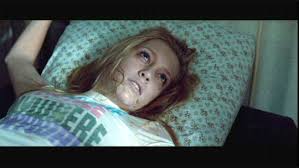
 Bryan Mills (Liam Neeson), a former government operative, is trying to reconnect with his daughter, Kim (Maggie Grace). Then his worst fears become real when sex slavers abduct Kim and her friend shortly after they arrive in Paris for vacation. With just four days until Kim will be auctioned off, Bryan must call on every skill he learned in black ops to rescue her
Hair and makeup in this film highlight the ages of the characters and what they have done, for example Neeson's character has messy hair throughout most of the movie which may highlight that he may have just done something that required physical movement for example running, so therefore his hair may be sweaty.


The makeup that the daughter and her friend wears highlights their ages, the daughter is most likely in her teens, she doesn't seem to wear that much makeup, if she does she keeps it natural.
The makeup also may represent the state of a person, for example pale makeup could highlight that the character is feeling unwell or that they're dead.
The Departed


South Boston cop Billy Costigan (Leonardo DiCaprio) goes under cover to infiltrate the organization of gangland chief Frank Costello (Jack Nicholson). As Billy gains the mobster's trust, a career criminal named Colin Sullivan (Matt Damon) infiltrates the police department and reports on its activities to his syndicate bosses. When both organisations learn they have a mole in their midst, Billy and Colin must figure out each other's identities to save their own lives.

Hair and makeup are crucial in this movie, it helps highlight their professions and the age of the characters. For example the lady shown above seems to be in her early 30's, because of her natural looking makeup and her hair tied back it suggests that she doesn't really care what she looks like in the morning. For the men the hair slicked back shows that they have power and the beard makes them look more serious and intimidating. The bolder makeup that the woman is wearing in the elevator makes her look older and more sophisticated.


Oldboy


Although his life is already in a downward spiral, things get much worse for advertising executive Joe Doucett (Josh Brolin) ; while drunk one night, Joe is kidnapped and thrown into solitary confinement in a bizarre, hotellike room. For the next 20 years, Joe suffers unimaginable torment, but the motive and identity of his captor remain unknown. When he is inexplicably set free, Joe emerges with one goal: to find the person who stole two decades of his life.

Hair and makeup in this movie are crucial because the hair could be shown to represent the victims feelings, how he's seeking for revenge for the time that he lost while he was held captive and his lack of human contact which may have led to him going crazy and losing the ability to talk to those around him.

The makeup could also represent brokeness, maybe
an injury that is on the inside, like a mental health problem.
The Story Behind The Crime Thriller Genre

Crime Fiction
Crime fiction is the literary genre that fictionalises crimes, their detection, criminals, action and their motives. It is usually distinguished from mainstream fiction and other genres such as historical fiction or science fiction, but the boundaries are indistinct. This is the basis of what crime thrillers are.
Crime thriller: This particular genre is a hybrid type of both crime films and thrillers that offers a suspenseful account of a successful or failed crime or crimes. These films often focus on the criminal(s) rather than a policeman. Central topics of these films include serial killers/murders, robberies, chases, shootouts, heists and double-crosses.
 Fun Fact - did you know that in Italy people commonly call a story about detectives or crimes giallo which translates to yellow, because books of crime fiction have usually had a yellow cover since the 1930s.
The crime thriller genre which includes movies such as The Girl on the Train, Momento, Memories of Murder and Vertigo came to life in the 1800's with the earliest known crime fiction being Thomas Skinner Sturr's anonymous Richmond, or Stories in the life of a Bow Street Officer back in 1827.
However this wasn't a full length crime fiction novel, the first full length crime fiction novel was Steen Steensen Blicher's The Reactor of Veilbye which was published in 1829. It is said the the Sherlock Holmes mysteries written by Arthur Conan Doyle have been singularly responsible fore the huge popularity in this genre.
 It is difficult to tell where crime fiction starts and where it ends, this being largely attributed to the fact that love, danger and death are central motifs in fiction and a less obvious reason is that the classification of a work may very well be related to the author's reputation.
The Crime Fiction has it's own subgenres, one being the Detective fiction subgenre with various forms of it being shown in a movie;
- The cozy mystery: a subgenre of detective fiction in which profanity, sex, and violence are downplayed or treated humorously.
- The locked room mystery: a specialised kind of a whodunit in which the crime is committed under apparently impossible circumstances, such as a locked room which no intruder could have entered or left.
- The whodunit: the most common form of detective fiction. It features a complex, plot-driven story in which the reader is provided with clues from which the identity of the perpetrator of the crime may be deduced before the solution is revealed at the end of the book.
- The Inverted detective story: Popularly called a "howcatchem," this is a genre of detective fiction where the reader is already aware of who the criminal is and the plot revolves around the detective discovering what the reader or audience already knows. The howcatchem was popularized by television shows such as Columbo and Barnaby Jones.
 Seen from a practical point of view, one could argue that a crime novel is simply a novel that can be found in a bookshop on shelves labelled "Crime". (This suggestion has actually been made about science fiction, but it can be applied here as well. Penguin Books has had a long-standing tradition of publishing crime novels in paperback editions with green covers and spines (as opposed to the orange spines of mainstream literature), thus attracting the eyes of potential buyers when they enter the shop. However, this clever marketing strategy does not tell casual browsers what they are really in for when they buy a particular book.
Chosen costumes

 We chose this costume and makeup for because it is the type of fashion that a teenage girl would wear, typically; wanting to be fashionable and fit in with the crowd.
We chose this suit for our detective because it suggests that the detective is formal, and imposes a stereotype, as it is stereotypical that a detective would wear a grey suit. The suit also suggests that the detective is quite high in the socio-economic scale and has a high status.
opening scenes
This opening scene used match on action, shot/reverse shot but did not follow the 180 degree rule. The shot reverse shot was used when the 2 kidnapped boys were looking at each other and trying to communicate. Match on action was used when the boys picked up the pen and then attacked the kidnapper.
The editing methods used were, overlaying, adding sound effects,
The shot transitions used were jump cuts, straight cuts, shot/reverse shot.
This opening scene used match on action but did not use shot/reverse shot, and 180 degree rule, as there was only one character in focus.
The editing methods used included, black and white colouring, parallel editing, and added news reports.
The shot transitions used were jump cuts, match on action and straight cuts.
This opening scene used the 180 degree rule, shot/reverse shot and match on action.
The editing methods used included, adding new reports, switching to titles during the action, adding Lions gate to the start, and speeding up motion.
The shot transitions include, match on action, shot/reverse shot, straight shot.
The point of this task is to look at previous examples to see what shots are used and what editing methods are also used. From looking at these opening scenes we going to add background noises to make the scenes more effective such as office noises and a police radio so that the audience know what the location would be. Another effective editing method was a crossfade which we will also use in our opening scene.
This task was designed to help us further understand what a good Opening Sequence is. Also to give us ideas we can incorporate into our own opening sequences and to give us ideas we wouldn't have thought of ourselves. This task was specifically meant to inspire us.
What we learnt from this task is that its best to keep things simple. Minimal talking etc. Its better to have a very immersive and simple opening sequence than a complicated one that constantly breaks immersion with inadequate filming and unnecessary dialogue.
We will make sure our OS is immersive and kept simple. If there is dialogue, we will make sure to incorporate in an interesting way, sound overlays for example.
Opening Sequence timeline notes


-Pink: A summary of what the scene will show the audience
-Yellow: Any scenes, props, other mise-en-scene that the audience will see
-Green: Any overlaying titles/captions


Creative camera shots

In the first shot, we like the white bringing out the emphasis of the character's facial features. We can link this to our opening sequence as it can show the start of a plan that is about to become action.

In the second shot, we like the blurred and un-blurred effect in which the foremost character can be seen clearly, while the character in the distance is blurred. We can link the second shot to our opening sequence as it can be used as one of the shots during our opening sequence.
 In the third shot, we enjoy the colour contrast and highlights on the shoes as this shows contrast between the grey ground and the black shoes and leggings. We can link this shot type to our opening sequence as it can be used during the sequence to show a character being dragged along the ground by another character, showing a point-of-view shot.
 1. we want the audience to feel inquisitive and drawn into the plot of the film.
2. we want the audience to know that the girl has been kidnapped.
3. we want the audience to have the following big question: who is the kidnapper?
Subscribe to:
Comments (Atom)